Modern Developments
Reform returned with the development of the Progressive movement in the early 20th century. Progressives, both in and outside the Republican party, sought to curtail monopolistic practices, improve public health, enact labor legislation, and make politics more representative. A leading force in the Progressive movement in Kansas and nationwide was William Allen White, editor of the Emporia Gazette. In 1913 the state was the first to adopt “blue sky” legislation to protect investors in securities. Kansas was also in the forefront in supporting prohibition (prodded by the anti-liquor crusader Carry Nation), the direct election of United States senators, full suffrage for women, the direct primary, and the system of referendum and recall.
Meanwhile, prosperity had returned to Kansas in the late 1890's. New developments, such as irrigation and dry farming, helped to spur agricultural growth. Industrial development was also stimulated. The major industries were meat packing, milling, and mining. Mechanization came to farming, and the demand for grain during World War I led to the opening of vast areas for wheat production.
Growth slowed in the 1920's, and conditions worsened during the Great Depression, which began in 1929. During the 1930's, the western part of Kansas suffered from serious droughts and dust storms. Many farmers left Kansas during that period. In 1936 Kansas' governor, Alfred M. Landon, ran for the Presidency as the candidate of the Republican party. During the period between the two world wars, Kansas was politically isolationist and conservative.
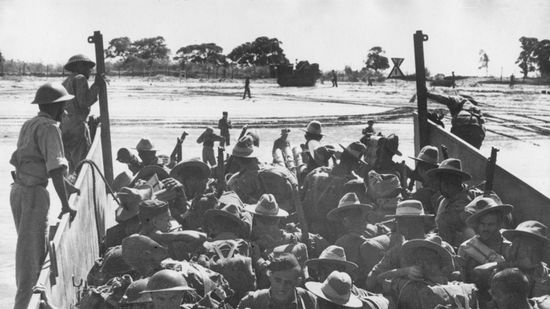
Economic conditions improved during World War II with the increased demand for the state's agricultural and mineral products. Heavy industry also expanded greatly, particularly war-related industries, such as aircraft manufacturing. After the war, Kansas became increasingly more urbanized and industrialized.
In the 1950's, much land in the western part of the state was reclaimed through the introduction of efficient methods of soil and water conservation. In the 1960's and 1970's, new industry was attracted to Kansas, the state's tourist trade expanded, and agriculture became highly commercialized with the decline of the family farm and the growth of large-scale corporate operations. In the 1980's, the state's economy was severely affected by recession, drought, and heavy flooding.
In 1990 Kansas elected its first woman governor, Joan Finney, a Democrat, who served one term, leaving office in 1995.
The states economy improved in the 1990's with the establishment of Kansas, Inc., as the state's economic planning agency. This program helped businesses to expand and added to the efforts of other developments with the same goal.