Enforcing Prohibition

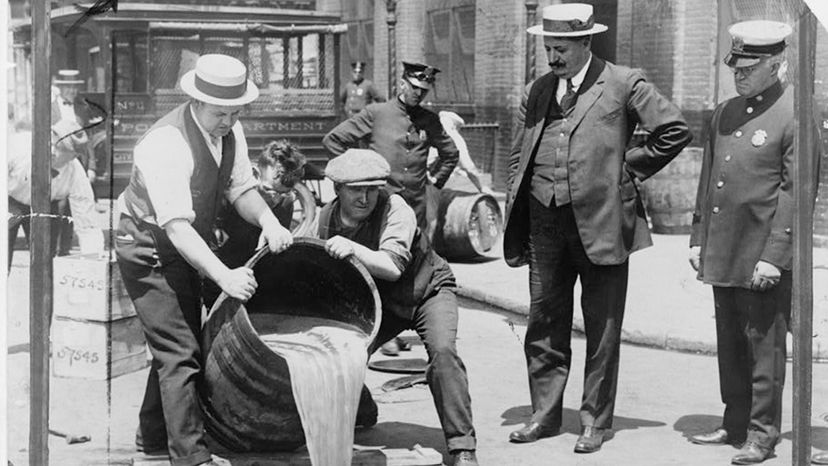
In a perfect world, once a law or constitutional amendment is passed, the resources necessary to enforce it are plentiful and effective. Prohibition, unfortunately for its supporters, was not so easily enforced. Many challenges quickly surfaced when it came time to keep demon rum from being bought, sold or imported.

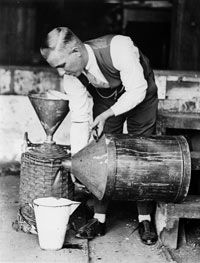
moonshine
American Stock/Getty Images
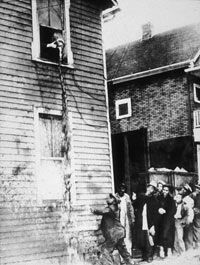
Bystanders attempt to catch moonshine being poured out of a second- story window by federal agents during a raid on an illegal still.­

  • G­angs of illegal alcohol traffickers, comparable to today's illegal drug rings, became common. They were able to charge a steep price for sneaking alcohol into the country -- and they thrived in the process.
  • It became obvious that bootlegging had reached an all-time high when the demand for $10,000 notes reached an unprecedented level in 1926. Critics of Prohibition recognized this as a telltale sign of large transactions between bootleggers.
  • European "rum fleets" proliferated. Small boats would sail out to ships waiting in international waters and bring back large quantities of alcohol. It was also very easy to smuggle alcohol from Canada.
  • Political corruption reached new levels, as those who were profiting from illegal trafficking lined the pockets of crooked politicians.
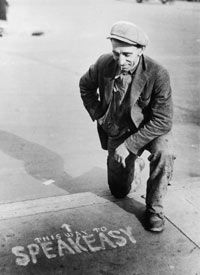
  • Illegal speakeasies flourished. Prior to Prohibition, there were fewer than 15,000 legal bars in the United States. By 1927, however, more than 30,000 speakeasies were serving illegally across the country. Approximately 100,000 people brewed alcohol illegally from home [source: Digital History].
  • Undercover police officers were trying to do their jobs, but the available manpower was still tiny in comparison with the thriving industry. Even when arrests were made, corruption made it nearly impossible to convict anyone. For example, during one time period more than 7,000 arrests were made in New York for alcohol violations, and only 17 of those ended in conviction. Many states eventually grew tired of the hassle. In fact, by 1925 six states had developed laws that kept police from investigating infractions. Cities in the Midwest and Northeast were particularly uninterested in enforcing Prohibition [source: Digital History].

Fiorello LaGuardia, mayor of New York City, testified before the Senate judiciary committee and had this to say about Prohibition: "It is impossible to tell whether Prohibition is a good thing or a bad thing. It has never been enforced in this country" [source: Pittsburgh Post-Gazette].

The Organized Crime Connection
The advent of Prohibition saw a burst in organized crime in the United States. Once alcohol was made illegal, people had to find other ways to get it. Enter organized crime, specifically Al Capone. Chicago-area gangster John Torrio took Capone under his wing, and Capone eventually took over Torrio's organization, bringing the crime ring of brothels, speakeasies, breweries and distilleries to new heights. At the peak of his success, his "businesses" yielded more than $100 million a year. Eventually, the corrupt mayor, who had decided not to fraternize with him anymore, forced him out of Chicago. Despite a morbidly impressive résumé of tax evasion, murder and other crimes, Capone served only a small amount of time behind bars. He was eventually released for health reasons and died in 1947 from cardiac arrest following complications from syphilis.