
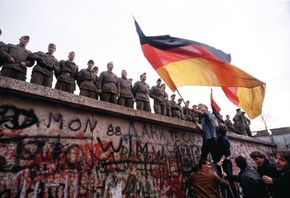
The Berlin Wall stood for nearly 30 years, splitting the city of Berlin into communist East Berlin and democratic West Berlin. Born of the splintering of Germany by the Allies at the end of World War II, the wall was a symbol of communist authoritarianism, the most visible element of the Iron Curtain. It separated families, cut people off from their jobs and left East Germans peering into the vibrant west from their drab communist apartments.
East German guards shot and killed more than 100 people who were so desperate to escape communist control that they tried to climb the wall or tunnel beneath it. More than just a physical barrier, to many the wall was proof that communist governments were so untenable they could only keep their citizens by force. Yet the Berlin Wall may have been exactly what the world needed when it was built. It offered stability at a time when the Cold War was dangerously close to erupting into a full conflict.
Advertisement
When the wall came down in 1989, it was equally symbolic, a sign that the iron grip of communist control was crumbling at last. The Eastern Bloc nations that lived under Soviet-installed dictators for decades threw off their shackles one by one. It wasn't long before the Soviet Union itself collapsed and marked the end of the Cold War. Yet even today, almost 20 years later, a reunified Germany feels the effects of the Berlin Wall and the split between East and West.
We're going to step back in time, first to the end of World War II, then to the Berlin Crisis and the building of the wall. We'll walk along both sides of the wall and examine life in divided Berlin. Then we'll experience the outburst of joy when the wall came down and examine the difficulties of German unification. Through it all, we'll try to untangle the geopolitical web that led both to the Berlin Wall's creation and its collapse.