The Modern Nation

Norway, with its abundant water power to aid its industry, was prosperous until the post-World War I slump. At the outbreak of that war, the Scandinavian nations had declared themselves neutral. The Norwegian merchant marine was largely in the service of the Allies, however, and after the war Norway was awarded Spitsbergen and Björn (Bear) Island, an area now known as Svalbard. In the early 1930's Norway annexed Bouvet and Peter I islands in the South Atlantic to use as whaling stations.

The depression of the 1930's was felt severely in Norway. In 1935 the Labor party formed Norway's first Socialist government. In the latter part of the decade it enacted important social legislation in a variety of fields.

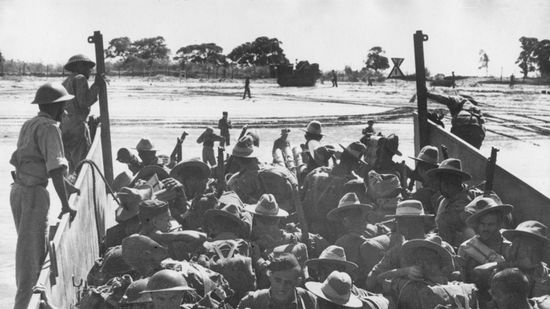
When World War II began, Norway declared itself neutral. Because of its strategic location, however, Germany invaded and occupied the country. King Haakon, Crown Prince Olaf, and the government took refuge in Great Britain, where the Norwegian government-in-exile was set up. In Norway the traitor Vidkun Quisling became head of the official political party, and in 1942 head of the puppet government.

A strong underground resistance movement grew up, assisted by exiles trained in Britain. Norway's merchant navy was at the disposal of the Allies. The country was liberated when Germany surrendered in May, 1945. Later in the year, Norway became a charter member of the United Nations. The nation joined the North Atlantic Treaty Organization in 1949. In 1957 Crown Prince Olaf succeeded to the throne as King Olaf V.

Norway, heavily dependent on foreign trade, helped form the European Free Trade Association in 1959. In 1967 it sought, unsuccessfully, to join the European Community, or EC (now known as the European Union). The EC offered membership to Norway in 1972, but the Norwegian people voted against entry. The government, however, negotiated special trade arrangements with the EC in 1973. Meanwhile, in the late 1960's, huge petroleum and natural-gas reserves were discovered in the Norwegian sector of the North Sea. In 1975 oil exports began on a large scale.

In 1994 Lillehammer, located about 80 miles (130 km) north of Oslo, was the site of the Winter Olympic Games. Also that year, the Norwegian people voted to reject an invitation from the European Union to become a member.

Norway has fostered peace talks in various countries. For example, the country helped Israel begin discussions between the Israeli government and the Palestine Liberation Organization in 1993, and Norway started talks in Sri Lanka between the Sri Lankan government and Tamil rebels in the early 2000's. Norway's efforts in Israel ultimately led to the Oslo accords.

The Labor Party won a majority of the seats in elections in 2005. It formed a coalition government with the Center and Socialist Left parties.

Rulers of Modern Norway
Haakon VII 1905–57
Olaf V 1957–91
Harold V 1991-