History, 1939–70

World War II

In the early stages of the war, it seemed possible that Britain might suffer defeat. In this period of crisis, Winston Churchill, a Conservative, became prime minister. His bold leadership and magnificent oratory made him the symbol of British courage. Soon the Soviet Union and the United States entered the conflict against Germany, Italy, and Japan. The war ended in August, 1945, with an Allied victory. In July wartime strains had brought the fall of the conservative Churchill government.

Postwar Era

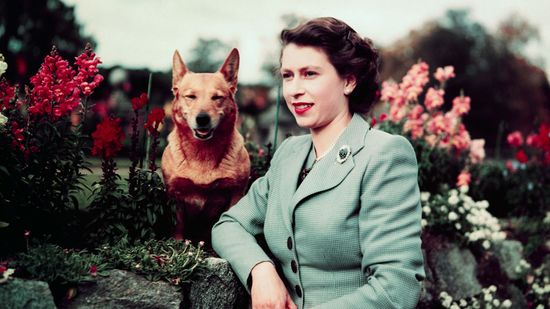
Under Labourite Clement Attlee the major Fabian socialist principles were put into effect. The Bank of England and key industries were nationalized. The government increased old-age pensions, set up a payments program for families falling below specified income levels, and established a system of socialized medicine. To relieve the financial plight caused by war debts and a weakened economy, the government devalued the currency and adopted austerity measures. It also received aid from the United States through the European Recovery Program. The Conservatives, returned to power in 1951, retained the social reforms enacted by the Labour party. George VI died in 1952 and was succeeded by his daughter Elizabeth II.

Economically and militarily depleted by World War II, Britain found its position in the world greatly changed. Although it was a leader in founding the United Nations and the North Atlantic Treaty Organization, it no longer ranked as a major power. The designation of “empire” had been dropped in 1947 when India was granted independence. One after another, British dependencies were becoming sovereign nations. Britain's weakened position was highlighted in 1956, when Egypt seized control of the Suez Canal. Britain and France sent in troops to retake the canal, but were forced by international pressure to withdraw.

In 1961 Britain, hoping to strengthen its economy, tried to join the European Community (known since 1993 as the European Union), but was blocked by France. The nation's economic condition steadily worsened, leading to an overturn of the Conservative government in 1964. The Labour party, however, was compelled to devalue the pound in 1967, and to decrease government spending on welfare programs and on military commitments. The voters returned the Conservatives to power in 1970.

History After 1970

After extended negotiations, the way cleared for Britain to join the European Community, and in 1972 Parliament approved entry. The economy remained stagnant, however, and then worsened as the oil-producing countries of the Middle East placed an embargo on the shipment of oil to western countries and, when the embargo was removed, raised prices. With the increased importance of coal, Britain's coal miners demanded pay raises and after an initial slowdown went on strike. At the beginning of 1974, the Conservative government established a three-day work week to conserve fuel. Inflation soared.

An election was called and the Labour party won a narrow victory. The miners' strike was settled, but the nation was left in desperate financial straits, and there was serious concern over the wisdom of Britain remaining in the European Community. One encouraging development, however, was the discovery in the early 1970's of rich oil deposits in the North Sea and natural gas reserves in the Irish Sea. In another general election, the Labour party was continued in power.

Meanwhile, the traditional antagonism between Protestants and Catholics in Northern Ireland had flared into violence, with many instances of terrorism. British troops were sent in to restore order, but failed; the British government was forced to take over direct rule of the country in 1972. Attempts to resolve the conflict were unsuccessful, and disorder continued.

Although Britain's economy improved slightly in the late 1970's; serious problems, including inflation and labor unrest, remained. Elections in 1979 brought the Conservatives to power, and party leader Margaret Thatcher became Britain's first woman prime minister. She introduced austerity measures that reduced inflation but aggravated already serious unemployment, which reached the highest levels since the Great Depression.

In April, 1982, Argentina seized the Falkland Islands, a British colony off the tip of South America. A British expeditionary force retook the islands in June.

The Conservatives called for Parliamentary elections in 1983 and won an overwhelming victory. In 1985 Britain and the Republic of Ireland signed a treaty that set up an Anglo-Irish commission through which the Republic would have a consultative role in the affairs of Northern Ireland.

Parliamentary elections in 1987 reaffirmed Conservative rule. In 1988 Thatcher became the longest-sitting prime minister since Lord Liverpool (1812–27). In 1990 Thatcher resigned as leader of the Conservatives following opposition on policy matters by some factions within her party. She was succeeded by John Major.

During 1990–91 Britain came into conflict with other members of the European Community by opposing further economic and political integration. The conflict lessened in December, 1991, when the British government, after being given the choice of “opting out” of certain provisions, approved a treaty that would further integrate the Community. The treaty was approved by the British parliament in 1993.

Meanwhile, during 1989–94 the provisional Irish Republican Army (provisional IRA) engaged in widespread terrorist bombings in Britain. Bombings subsided somewhat in mid-1994, and during 1994–96 the British government and leaders from the Republic of Ireland and Northern Ireland (including representatives from Sinn Fein, the political arm of the provisional IRA) conducted negotiations concerning the future of Northern Ireland. A deal was reached in 1998 granting increased autonomy to Northern Ireland and ending direct rule from London.

In 1996 a scientific report was issued in Britain that linked a fatal disease found in many of Britain's cattle (“mad cow disease”) to a fatal disease in humans. Britain developed a plan, implemented over several years, to slaughter diseased cattle and cattle most likely to be affected by the disease.

Parliamentary elections in May 1997 were won in a landslide by the Labour party, ending 18 years of Tory government. The new Labour majority in Parliament was the largest any party had held since 1935 and Tory representation was the lowest it had been since 1906. Labour party leader Tony Blair became Prime Minister.

A major campaign issue was Britain's participation in the European Monetary Union. Most Tories opposed joining but John Major was reluctant to rule it out until late in the campaign. Blair promised to hold a national referendum on joining. Blair also pledged in his campaign to grant Scotland and Wales greater autonomy. In 1997 Scottish and Welsh voters, in separate ballots, approved the creation of local legislatures: a powerful Parliament in Scotland and a National Assembly, with far fewer powers, in Wales.

On July 7, 2005, terrorists set off bombs in London subways and on a bus, killing 56 persons and injuring 700 others. In a second attack two weeks later, only the detonators exploded and there were no casualties.

In June 2007, Tony Blair resigned as prime minister and leader of the Labour Party. Gordon Brown succeeded Blair as prime minister and Labour Party leader.