Why Did the Berlin Wall Fall?

By: Lena Thaywick  | 
The fall of the Berlin Wall signaled the end of the Cold War. DacologyPhoto / Shutterstock

The fall of the Berlin Wall was one of the most powerful and symbolic moments of the 20th century. But why did the Berlin Wall fall?

The answer involves a perfect storm of civil unrest, political shifts, and a crumbling communist regime across the Eastern Bloc.

Advertisement

A Divided Germany After World War II

After World War II, Germany was divided into East Germany (the German Democratic Republic) and West Germany (the Federal Republic of Germany). Berlin, located deep in the Soviet-controlled East, was split into East Berlin and West Berlin.

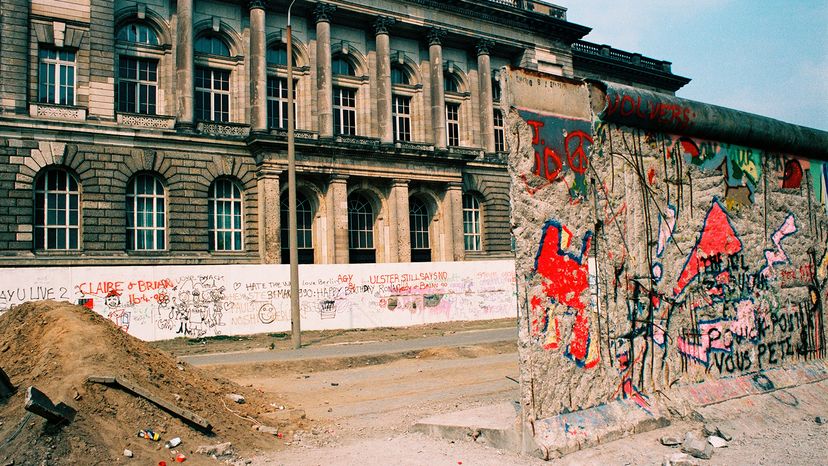
The Berlin Wall, erected in 1961, was a heavily guarded structure that included a barbed wire border fence, a mined corridor, and armed border troops. Its main purpose was to prevent East Germans from fleeing to the democratic West. East German citizens were cut off from their families, jobs, and the freedoms of the Western world.

Advertisement

The Wall and the Cold War

The wall became a physical symbol of the Cold War, separating not just a city, but the ideological divide between communist East Germany and capitalist West Germany.

The East German regime, backed by the Soviet Union, maintained tight control through surveillance, censorship, and the feared secret police (Stasi).

Advertisement

Despite this, many East Germans still tried to escape. Some fled through neighboring Eastern Bloc countries, while others risked their lives scaling the wall. The inner German border, which extended beyond Berlin, was also a barrier to freedom.

Mounting Pressure Across the Eastern Bloc

In the 1980s, the Soviet Union under Mikhail Gorbachev introduced perestroika (economic reform) and glasnost (political openness). These changes weakened the grip of the Soviet system across Eastern Europe.

Other Eastern Bloc countries began to shift.

Advertisement

In Poland, the Solidarity movement pushed for free elections. The Velvet Revolution in Czechoslovakia inspired calls for democratic reform. In Hungary, the border with Austria was opened, triggering a mass exodus of East German refugees who fled west through the new route.

Civil Unrest and Public Protests

Back in East Germany, civil unrest grew. Tens of thousands of East German citizens took to the streets of cities like Leipzig, demanding free elections and the right to travel. The East German government could no longer contain the growing dissatisfaction.

Western media broadcast images of protests and repression, fueling public opinion and drawing attention from the global community. Even the West German embassy in Prague became a makeshift haven for East German refugees.

Advertisement

A Press Conference That Changed History

On November 9, 1989, during a live press conference, an East German official mistakenly announced that new border crossings between East and West Berlin were open “effective immediately.” Confused border guards at the city center were overwhelmed by thousands of East Berliners demanding to cross.

With no clear orders, border guards eventually let people through. Crowds surged past the Brandenburg Gate and other crossing points, tearing down segments of the wall with their bare hands. West Berliners greeted them with cheers, flowers, and celebration.

Advertisement

The Fall and Reunification

The fall of the Berlin Wall signaled the collapse of communist East Germany. Within weeks, the East German population was flooding into West Berlin. The East German government quickly lost control, and calls for democratic reform intensified.

By October 1990, Germany was officially reunified. Former East Berlin joined with West Berlin, and the Iron Curtain—once stretching across Eastern Europe—was gone.

Advertisement

The wall became a historic monument, with segments preserved at places like the East Side Gallery in the Kreuzberg-Friedrichshain district.

Legacy of the Berlin Wall

Today, the fall of the Berlin Wall is seen as a turning point not only for Germany but for the world. It marked the end of the Cold War and inspired democratic change throughout Eastern Bloc countries. It showed that even the most heavily guarded walls cannot withstand the will of the people.

The wall began as a tool to divide and control, but it ended as a symbol of unity and resilience, reminding us of what can happen when people come together to demand freedom and justice.

Advertisement

We created this article in conjunction with AI technology, then made sure it was fact-checked and edited by a HowStuffWorks editor.

Advertisement

Loading...