Why Did the USSR Fall? The Real Costs of Becoming a Superpower

By: Lena Thaywick  | 
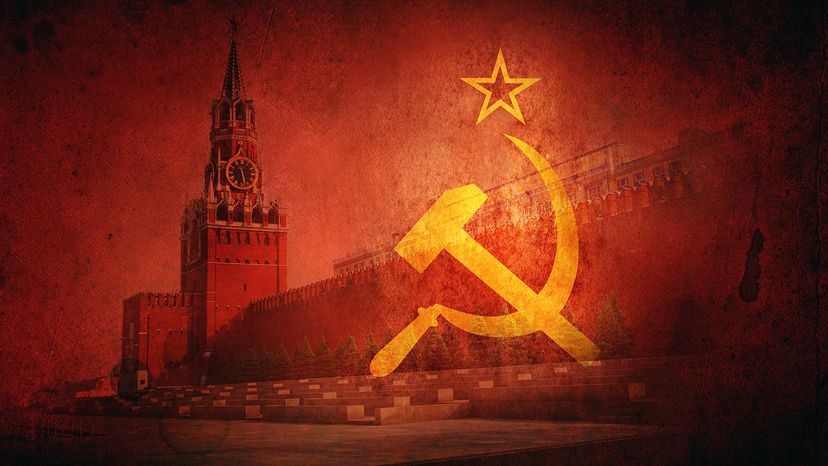
Soviet collapse didn't happen overnight. Triff / Shutterstock

By asking "Why did the USSR fall," you're really asking how a superpower unraveled from the inside.

The Soviet Union began as a revolutionary experiment and ended as a slow-moving collapse shaped by economic decline, political reforms, and rising national identities.

Advertisement

The dissolution of the USSR in 1991 was not a single event but the final stage of a long process.

How the Soviet Union Began and What It Became

The Soviet Union began after the Russian Revolution and civil war.

Led by the Bolshevik Party, the new state initially unified several socialist republics (eventually 15 in total) into the Union of Soviet Socialist Republics. The Soviet system centralized power through the Communist Party, the Central Committee, and the Supreme Soviet.

Advertisement

For decades, the Soviet regime controlled all political parties, directed the economy, and dominated daily life throughout the Soviet Union.

Economic Stagnation Undermined the Soviet Model

By the late Cold War, the Soviet economy was no longer working. Central planning failed to keep up with industrial production demands, consumer needs, or technological change.

Economic stagnation lowered living standards for Soviet citizens and weakened popular support. A massive increase in military spending during the arms race also diverted resources away from civilian life.

Advertisement

The Cost of the Cold War and World War II

The Soviet Union paid a heavy price to become a superpower. World War II devastated the Soviet Union, killing more than a quarter of its population in some regions.

The Cold War extended those pressures through decades of military competition, foreign policy commitments, and support for allied regimes from East Germany to other parts of Eastern Europe.

Advertisement

Gorbachev’s Reforms Changed Everything

Mikhail Gorbachev became general secretary in 1985 and implemented reforms that introduced political openness and economic restructuring.

Policies known as glasnost and perestroika aimed to modernize the Soviet model, but they weakened Moscow’s control over the Soviet republics. Soviet officials lost authority as criticism of communist rule became public.

Advertisement

National Identities Reasserted Themselves

As central power weakened, republics pushed back.

The Baltic states led the way, followed by Ukraine and several other republics. Ethnic disputes, ethnic violence, and renewed national identities made centralized rule impossible.

Advertisement

Former Soviet republics demanded sovereignty and control over taxes, resources, and local government.

Political Breakdown and the Failed Coup Attempt

In 1991, hardliners tried to stop the collapse. A coup attempt by conservative Soviet leaders aimed to preserve the Soviet government and block reforms.

The failure of the coup destroyed what remained of the Soviet leadership’s legitimacy and accelerated the total collapse.

Advertisement

Boris Yeltsin and the End of the Soviet State

Power shifted rapidly from Soviet institutions to Russia.

Boris Yeltsin emerged as the dominant political figure, sidelining the Supreme Soviet and the Communist Party.

Advertisement

In December 1991, the Soviet Union ceased to exist and was replaced by independent states linked loosely through the Commonwealth of Independent States.

Why the Collapse Was Final

The USSR collapse was irreversible by the end. Economic decline, political reforms, loss of popular support, and the erosion of central authority combined into a system failure.

When Gorbachev resigned, there was no institution left capable of holding the union together.

Advertisement

The former Soviet Union did not fall because of one decision. It fell because its system could no longer adapt to reality.

We created this article in conjunction with AI technology, then made sure it was fact-checked and edited by a HowStuffWorks editor.

Advertisement

Advertisement

Loading...