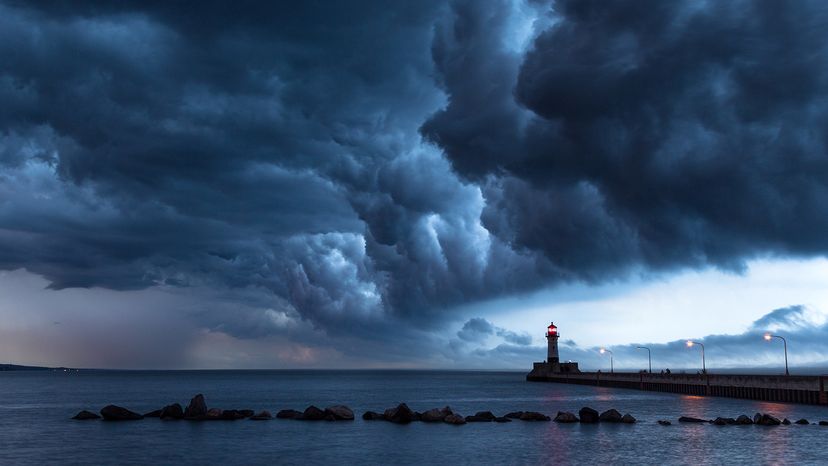
On November 9, 1975, the Fitzgerald departed from Superior, Wisconsin, fully loaded with over 26,000 tons (23,587 metric tonnes) of taconite pellets. It was bound for a steel mill near Detroit. Aboard were Captain Ernest McSorley and a seasoned crew.
The weather forecast called for worsening conditions, but no one anticipated that they would encounter what Captain McSorley described as “one of the worst seas he had ever been in."
By November 10, winds were gusting over 70 knots, with waves reaching heights of 35 ft (10 m). The Fitzgerald was accompanied by another freighter, the Arthur M. Anderson.
The two ships stayed in radio contact as they battled gale-force winds and high waves in the Six Fathom Shoal area near Caribou Island.
As the storm intensified, the Fitzgerald reported issues, including a lost fence rail and vent covers, and the ship was listing. Captain McSorley radioed that "we are holding our own" near Whitefish Bay, but that was the last anyone heard. No distress signal was ever sent.
When the Fitzgerald failed to arrive, a search was launched by the Coast Guard, with support from other ships and aircraft. Wreckage was later found 17 miles (27 km) from Whitefish Point, near the Whitefish Point Light.
The entire crew was lost.