5 Most Corrupt Presidents in U.S. History (Including a Civil War Hero)

By: Lena Thaywick  | 
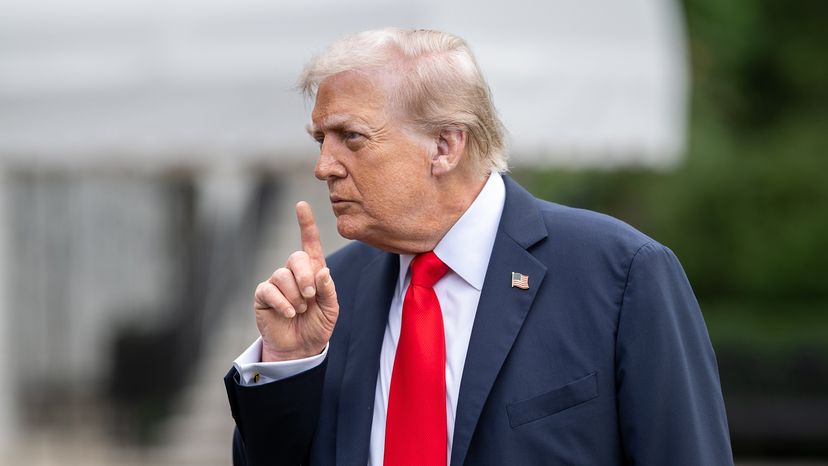
There's a reason you keep seeing this face pop up with certain labels. Kaua209 / Shutterstock

Many debates in American politics revolve around the question of most corrupt presidents to ever hold office in the White House. Historians usually evaluate corruption by looking at criminal indictments, abuse of power, financial misconduct, ethics violations, and documented scandals connected to a presidency.

The U.S. Constitution allows removal of a president for "Treason, Bribery, or other high Crimes and Misdemeanors," showing that the founders expected corruption to be a real risk in public office. When corruption takes root at the highest level of government, it can erode trust in institutions and weaken democratic norms.

Advertisement

Looking across American history, several presidencies stand out for scandals, conflicts of interest, or abuses of power. The following list highlights some of the most widely cited examples.

1. Donald Trump

Some ethics watchdogs describe the Trump presidency as one of the most corrupt presidencies in American history. Analysts frequently point to thousands of documented conflicts of interest connected to Trump businesses while he held the White House.

During his time in office, Donald Trump continued to benefit financially from outside income tied to the Trump Organization. Estimates suggest more than $1.6 billion in revenue flowed through those business interests during the years of the administration.

Advertisement

Critics argued these relationships raised potential concerns about the Constitution's emoluments clause and whether foreign governments or special interests could influence policy. The administration was also marked by nepotism and unusually close ties between public office and private business.

As of 2026, Trump is the only U.S. president ever criminally indicted, facing dozens of felony charges tied to activities during and between his presidential terms. Many scholars place the Trump administration alongside other historically notorious cases of presidential corruption.

Advertisement

2. Richard Nixon

Richard Nixon remains a benchmark for presidential corruption because of the Watergate scandal. Agents of the Committee for the Re-election of the President broke into the headquarters of the Democratic National Committee in the Watergate complex during the 1972 election.

The real crisis came afterward. Nixon and his allies attempted a cover up while directing agencies such as the IRS, CIA, and FBI to target political opponents. These actions represented a serious abuse of presidential power via astonishing and brazen corruption.

Advertisement

The scandal triggered congressional investigations and ultimately forced Nixon to resign in 1974, making him the first U.S. president to leave office under those circumstances.

3. Warren G. Harding

Many historians argue Warren G. Harding presided over the most corrupt administration in U.S. history. Harding's presidency became synonymous with the Teapot Dome scandal, a massive bribery scheme involving federal oil reserves.

Government officials secretly leased naval oil fields to private companies in exchange for bribes and financial favors. The scandal shocked the nation and triggered one of the largest corruption investigations of the early 20th century.

Advertisement

Harding's inner circle—sometimes called the "Ohio Gang"—became known for graft, kickbacks, and embezzlement.

One of the most notorious figures was Charles R. Forbes, head of the Veterans Bureau, who illegally sold government medical supplies and took kickbacks that cost taxpayers more than $200 million—a stunning exhibition of outright corruption.

Advertisement

4. Ulysses S. Grant

Ulysses S. Grant is often described as personally honest yet surrounded by corruption. His presidency included several major scandals tied to government officials and political allies.

One of the most famous was the Whiskey Ring scandal, which involved tax evasion among government officials and whiskey distillers. Investigators discovered an organized network that diverted federal tax revenue into private pockets.

Advertisement

Grant remained loyal to several allies even after evidence of wrongdoing appeared. That loyalty helped create the perception of a corrupt administration despite Grant's personal reputation for integrity.

5. Andrew Johnson

Andrew Johnson's presidency after the Civil War produced intense political conflict and accusations of corruption. Johnson clashed repeatedly with Congress over Reconstruction policy.

Historians have documented that some individuals acted as pardon brokers, seeking individual pardons for former Confederates that could facilitate restoration of property rights.

Advertisement

Johnson also faced accusations of bribery. In 1868 the House of Representatives impeached him, making him one of the earliest presidents to face removal proceedings.

Dishonorable Mention: VP Spiro Agnew

Although not a president, Vice President Spiro Agnew became part of the broader story of corruption in the Nixon era. Investigators discovered he had accepted bribes and committed tax fraud.

Agnew resigned in 1973 after pleading no contest to criminal charges. His departure occurred just before the Watergate scandal forced Nixon from office.

Advertisement

The Iran-Contra Affair: Another Embarrassment

While not a personal bribery case, the Iran-Contra Affair represented one of the most controversial political scandals tied to a presidential administration. Officials secretly sold weapons to Iran and redirected the money to support Nicaraguan rebels.

Congress had explicitly prohibited funding those rebels, meaning the operation bypassed legal oversight. The affair highlighted how executive branch officials could circumvent congressional authority.

Advertisement

Why Presidential Corruption Matters

Corruption in leadership can undermine public trust in democracy. When leaders appear to place personal or political interests above the national interest, citizens often lose confidence in institutions and their ability to facilitate a more peaceful world.

In many countries, repeated corruption scandals have helped authoritarian regimes gain power by weakening democratic safeguards. Political scientists note that corruption can create a culture where laws are not applied equally and public accountability declines.

Advertisement

These patterns explain why corruption scandals often spark reform movements aimed at strengthening democratic institutions.

The Role of Congress and the Constitution

The American constitutional system includes safeguards designed to limit corruption. Congress has the authority to investigate wrongdoing and remove presidents through impeachment if necessary.

The Constitution's standard of "high Crimes and Misdemeanors" provides the legal basis for accountability. Throughout U.S. history, that mechanism has been used to confront abuses of power and protect democratic institutions.

Advertisement

How History Judges Corrupt Presidencies

Over time, historians evaluate presidencies using archival evidence, congressional investigations, and public records. Surveys of historians often rank administrations according to documented scandals and abuses of power.

When corruption occurs at the highest level of government, the consequences extend far beyond a single administration. Public trust, democratic norms and the rule of law can all be affected.

These evaluations help explain why the aforementioned presidencies are frequently cited in discussions about corruption in American history.

We created this article in conjunction with AI technology, then made sure it was fact-checked and edited by a HowStuffWorks editor.

Advertisement

Loading...