The List of Countries That Start With Q Is Extremely Short

By: Lena Thaywick  | 
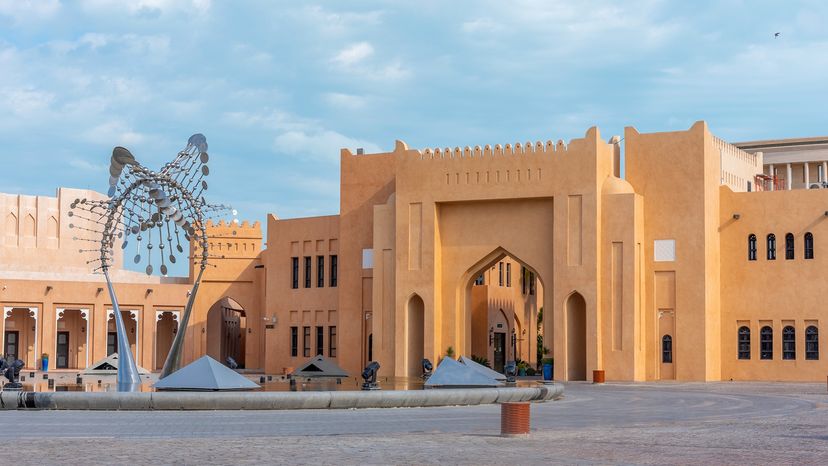
The African city of Doha is the capital of Qatar. trabantos / Shutterstock

Many people assume there must be several countries that start with Q. After all, the world contains nearly 200 countries. So it seems logical that more than one would begin with that letter. But when you look at country names in English, the list is unexpectedly short.

In fact, only one country name begins with the letter Q. That country is Qatar. It's a small nation on the Arabian Peninsula with an outsized role in global energy and economics.

Advertisement

Understanding why there is only one example involves language patterns, history and geography. Once you look closely at the letter Q, the answer starts to make sense.

Why Only One Country Starts With Q

When people search for countries by letter, some letters produce long lists. Others barely produce any results. The letter Q falls into the second category.

Across the world's languages, uvular consonants are found in only roughly one-sixth of the languages surveyed. That makes it one of the less common sounds used at the beginning of words. In English vocabulary, it's even rarer. Letter-frequency counts place Q at about 0.11 percent of letters in English text.

Advertisement

Because country names often originate from local languages and then shift through translation, the rarity of this sound affects geography lists, too. As a result, only one country name begins with Q.

What's more, if you browse lists of world countries or reference tables, the result is consistent. From A to Z, only one entry appears under Q.

Advertisement

Qatar's Place on the World Map

The only country that starts with Q is Qatar. It sits in the Middle East along the northeastern coast of the Arabian Peninsula.

Qatar borders Saudi Arabia by land and extends into the Persian Gulf on three sides. Its peninsula location places it in western Asia while providing access to important shipping routes in the Gulf region.

Advertisement

Further, the capital city is Doha, which holds most of the country's population and serves as its political and economic center. Over the past several decades, Doha has developed rapidly with major infrastructure projects, financial institutions and global businesses.

The History Behind Qatar's Name

Although the country appears as "Qatar" in English today, its name has taken several forms over time. This is because transliteration from Arabic into the Latin alphabet can produce different spellings depending on how sounds are represented.

Earlier European records sometimes wrote the name as "Katar" or other phonetic variations. These changes reflect attempts to match Arabic pronunciation with the letters used in English and other European languages.

Advertisement

The name itself goes back centuries. Historical sources trace it to Syriac literature from the fourth to the ninth centuries AD, when settlements in the region were known by the Syriac name "Beth Qatraye," referring to communities along the Gulf coast.

These language shifts also help explain why the list of countries that start with Q contains only one example today.

Advertisement

Population, Cities and Demographics

Qatar's population is approximately 3.16 million people. Yet only a small percentage of those residents are Qatari citizens. The remaining population consists largely of expatriate workers who moved to the country for economic opportunities. This helps explain why a large share of residents are immigrants.

Another demographic feature stands out as well. Women make up about 28.7 percent of the population, which is one of the lowest female population shares in the world.

Advertisement

Qatar is also one of the most urbanized countries on Earth. Around 99.3 percent of people live in cities, meaning rural communities are nearly nonexistent. Most residents live in and around Doha.

Government, Energy and Economic Influence

Modern Qatar operates as a monarchy led by the Al Thani family. The family gained control of the region in the mid-19th century and continues to rule today.

Additionally, the country declared independence in 1971. Today, it's governed by Sheikh Tamim ibn Hamad Al Thani, who serves as emir.

Advertisement

Despite its small geographic size, Qatar has an enormous economic influence. The country ranks among the world's leading producers of natural gas and crude petroleum. In fact, it's the fifteenth-largest producer of crude oil, including lease condensate and the world’s sixth-largest dry natural gas producer.

These resources help give Qatar one of the highest per-capita incomes in the world. Energy exports also attract workers from across the globe, shaping the country's international population.

Advertisement

Language, Religion and Daily Life

Islam is the dominant religion in Qatar and represents about 62.5 percent of the population. Islamic traditions also influence public life, law and cultural practices.

Arabic serves as the official language used by the government and most institutions. That said, English is widely spoken as a second language, especially in business, education and international communication.

Advertisement

Because workers from many countries live in Qatar, daily life includes dozens of languages and cultural traditions. This diversity reflects the country's role as a global economic hub despite its small size.

We created this article in conjunction with AI technology, then made sure it was fact-checked and edited by a HowStuffWorks editor.

Advertisement

Advertisement

Loading...