Who Is Iran Allies With?

By: Wren Corvayne  | 
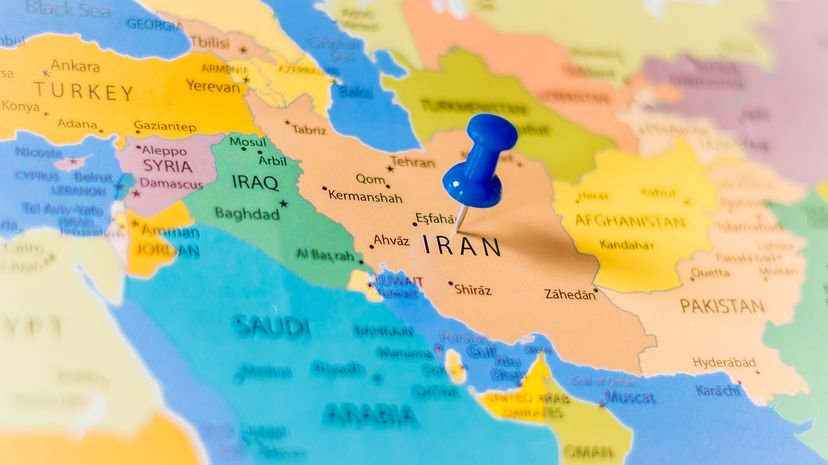
Iran depends on a mix of regional governments, foreign countries, and the Axis of Resistance to protect itself in a broader regional war. Yusuf Ucuz / Shutterstock

Anyone watching headlines in 2026 is wondering, who is the U.S. allies with? Who is Iran allies with? Many are trying to understand how the Islamic Republic builds partnerships and influence across the Middle East and the wider world.

The Iranian government maintains diplomatic relations with major countries such as Russia and China while also supporting armed groups and political allies across several countries in the region.

Advertisement

These relationships help the Iranian regime protect its security interests, respond to pressure from Washington, and project power beyond Iranian territory. At the same time, tensions with Israel, the United States, and other nations mean Iran's alliances are constantly shifting.

To understand Iran's allies, it helps to look at three layers: global state partners, regional governments, and the network of armed groups often described as the Axis of Resistance.

Advertisement

Russia And China: Iran's Most Powerful State Partners

Russia and China are widely considered Iran's most important global partners. Both countries maintain strong diplomatic relations, trade ties, and military cooperation with Tehran.

Tehran and Beijing

China is Iran's largest trading partner and its most important energy customer. Chinese companies purchase large quantities of Iranian crude oil despite sanctions imposed by Washington and the Trump administration.

Advertisement

In 2025 China bought more than 80 percent of Iran's exported oil, making Beijing an economic lifeline for the Iranian government.

The two countries deepened ties through a 25-year cooperation agreement signed in 2021 designed to expand cooperation in energy, infrastructure, and other economic sectors. China has also opposed efforts by the United States to push regime change in Iran and often criticizes American policy toward the Iranian nuclear program.

Tehran and Moscow

Russia also maintains strong ties with Tehran. Moscow and the Islamic Republic signed a strategic partnership treaty in January 2025 that expanded political, economic, and military cooperation.

The agreement strengthened relations between Iranian officials and President Vladimir Putin, though it stops short of a mutual defense pact.

That means Russia is not obligated to send troops if Iran faces a major attack. Still, Russia has supplied military equipment including Yak-130 training aircraft, and Iran has said plans have been finalized for the delivery of Mi-28 attack helicopters.

Russia and China have also used diplomatic channels at the UN Security Council to criticize U.S. and Israeli actions against Iran, describing the strikes as violations of the UN Charter and international law.

Despite this rhetoric, neither Moscow nor Beijing has indicated it would intervene militarily in a regional war involving Iran.

Advertisement

Iran's Regional Strategy: The Axis Of Resistance

Iran's most important allies are not always governments. Much of Iran's influence in the region comes from an informal network of armed groups known as the Axis of Resistance.

This coalition includes Hezbollah in Lebanon, Hamas in Gaza, militias in Iraq such as the Popular Mobilization Forces, and the Houthi movement in Yemen. Groups such as Kata'ib Hezbollah are also linked to Iran's broader strategy in Iraq.

Advertisement

Iran provides financial support, training, and advanced weaponry to these organizations. U.S. officials have estimated that Iran gives Hezbollah about $700 million each year.

The strategy allows Iran to project power across the Middle East while keeping most fighting outside Iranian territory. By supporting allies across multiple countries, Iran creates a deterrent against direct military strikes from Israel or the United States.

These groups have carried out attacks on American military bases in Iraq and threatened retaliatory campaigns against U.S. forces if conflicts escalate.

Advertisement

Iraq, Lebanon And Yemen: Where Iran Holds The Most Influence

Iran maintains strong influence in several countries through allied militias and political organizations.

In Iraq, Iranian-backed militias operate within the Popular Mobilization Forces, which include roughly 200,000 fighters. Some factions have threatened attacks on U.S. troops stationed in Iraq, where about 2,500 American personnel remain.

Advertisement

Lebanon is home to Hezbollah, one of Iran's most powerful partners. Hezbollah receives funding, weapons and political backing from Tehran and plays a major role in Lebanon's politics and military landscape.

In Yemen, Iran supports the Houthis, who control large parts of the country. The Houthis have declared they would retaliate if Washington becomes directly involved in conflicts involving Israel and Iran.

Through these allies, Iran can influence shipping routes and strategic waterways including the Strait of Hormuz and the Red Sea, areas that carry a large share of the world's oil supply.

Advertisement

Setbacks In Syria And Regional Conflicts

Iran's alliances have also faced serious challenges. Syria was once one of Tehran's most important state allies under Bashar al-Assad. The Assad government allowed Iran to move weapons and support Hezbollah through Syrian territory.

However, upheaval in Syria weakened that alliance and reduced Iran's influence there. Conflicts across the region have also degraded several members of the Axis of Resistance.

Advertisement

The crisis that began with the October 7 attacks against Israel in 2023 led to major military campaigns in Gaza and Lebanon. Israeli operations significantly weakened Hamas and Hezbollah, damaging parts of Iran's proxy network.

Even so, some groups remain active. Militias in Iraq and the Houthis in Yemen continue to operate and maintain close ties with Tehran.

Advertisement

Diplomatic Politics And Global Tensions

Iran's alliances are shaped by global politics as well as regional conflicts. Leaders in Washington—including U.S. President Donald Trump—have imposed sanctions and taken a hard line against the Iranian regime.

American officials frequently accuse Tehran of developing ballistic missiles and pursuing a controversial nuclear program. Iranian officials reject many of these accusations and argue that U.S. policies threaten their country's security interests.

Advertisement

At the same time, Iran has tried to improve diplomatic ties with former rivals. Tehran has opened discussions with countries such as Saudi Arabia and Egypt as part of efforts to reduce tensions across the region.

Pakistan has also expressed solidarity with Iran during moments of rising confrontation involving Israel and the United States.

For Iran's supreme leader and the Iranian president (currently Masoud Pezeshkian), alliances are a key part of national strategy. By balancing partnerships with powerful countries like Russia and China while supporting regional allies, the Islamic Republic attempts to expand its influence.

We created this article in conjunction with AI technology, then made sure it was fact-checked and edited by a HowStuffWorks editor.

Advertisement

Advertisement

Loading...