Why Did Ancient Egypt Fall When Rome Entered the Picture?

By: Lena Thaywick  | 
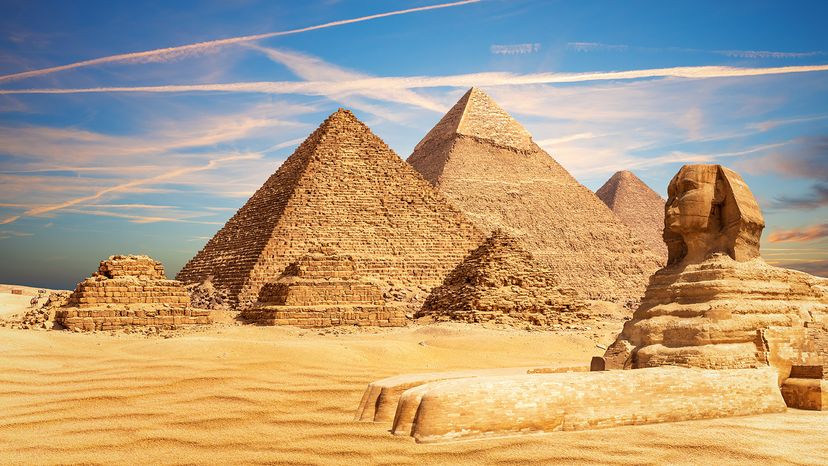
Civil war and foreign influence proved a disastrous combination for Egypt. AlexAnton / Shutterstock

Why did ancient Egypt fall? Settle in for the story of how one of the longest-lasting civilizations in the ancient world slowly lost power.

Ancient Egypt did not collapse in a single moment. The decline of ancient Egypt was a gradual process shaped by internal strife, foreign invasions, and economic difficulties that weakened what was once a mighty civilization.

Advertisement

The Rise of a Powerful Ancient Egyptian Civilization

Ancient Egypt emerged along the Nile River, which supported agriculture, trade, and centralized authority.

From the Old Kingdom through the Middle Kingdom, great pharaohs ruled a unified land stretching from Lower Egypt to Upper Egypt. Ancient Egyptians enjoyed stability, wealth, and cultural continuity, including hieroglyphic writing, strong religious traditions, and an organized Egyptian army.

Advertisement

Political Instability and the Intermediate Periods

After strong eras of central authority came periods of fragmentation known as intermediate periods, including the Third Intermediate Period.

Weak leadership, power struggles among elites, and civil war fractured Egypt into rival regions, eroding Egyptian sovereignty and the authority of the native royal house.

Advertisement

Environmental and Economic Pressures

Egypt relied heavily on predictable Nile flooding—so when environmental factors such as drought reduced harvests, Egypt’s wealth fell as well.

Economic decline followed as natural resources were strained, trade slowed, and the state struggled to pay soldiers and officials, weakening military power and social order.

Advertisement

Foreign Invasions and External Threats

Egypt’s weakness invited outside control. Assyrian invasions and Persian conquests during the Late Period placed Egypt under foreign rule.

The 27th and 31st Dynasties were periods of Achaemenid Persian domination, when foreign rulers governed Egypt and employed mercenaries (including Greek soldiers), and in some cases plundered Egyptian temples, undermining native traditions.

Advertisement

The End of Pharaonic Rule

Native rule eventually disappeared.

By the time Egypt entered the Hellenistic world, pharaonic rule had effectively ended, and Egypt was ruled by foreign dynasties that embraced Egyptian culture only superficially—meaning, when doing so helped legitimize their own power.

Advertisement

The Ptolemaic Dynasty and Hellenistic Rule

After Alexander the Great, Egypt was ruled by the Ptolemaic Dynasty. This Greek-led dynasty blended Egyptian traditions with Hellenistic rule, but political instability and internal conflicts plagued the state.

Queen Cleopatra VII, the most famous Ptolemaic ruler, struggled to preserve Egyptian sovereignty amid Roman interference.

Advertisement

Rome’s Growing Influence

Rome’s power reshaped the eastern Mediterranean. Julius Caesar and Mark Antony both intervened in Egyptian politics, tying Egypt’s fate to Roman civil wars.

Despite Egypt’s strategic importance, Roman leaders viewed it primarily as a source of grain and wealth.

Advertisement

The Roman Conquest of Egypt

Ancient Egypt fell permanently under Roman control in 30 B.C.E. After the defeat of Cleopatra VII and Mark Antony, Emperor Augustus conquered Egypt and turned it into a Roman province.

Under Roman rule, Egypt’s pharaonic government was dismantled and replaced with Roman administration, and the once-powerful Egyptian priesthood was tightly controlled. Eventually, imperial edicts outlawed the old pagan rites and led to temple closures.

Advertisement

Life Under Roman Rule

Egypt changed under the Roman Empire, governed by Roman emperors rather than pharaohs.

While some Egyptian culture survived, native Egyptian political power vanished, and Egypt’s role shifted from independent empire to provincial supplier.

Advertisement

Why Ancient Egypt Never Recovered

The fall of ancient Egypt was the result of cumulative pressures.

Internal divisions, repeated foreign invasions, economic decline, and loss of central authority prevented recovery.

Although ancient Egyptian society left an enormous cultural legacy, the once-mighty civilization never regained its independence under the domination of these later empires.

We created this article in conjunction with AI technology, then made sure it was fact-checked and edited by a HowStuffWorks editor.

Advertisement

Loading...