Why Did Babylon Fall? Lessons in History and Religion

By: Lena Thaywick  | 
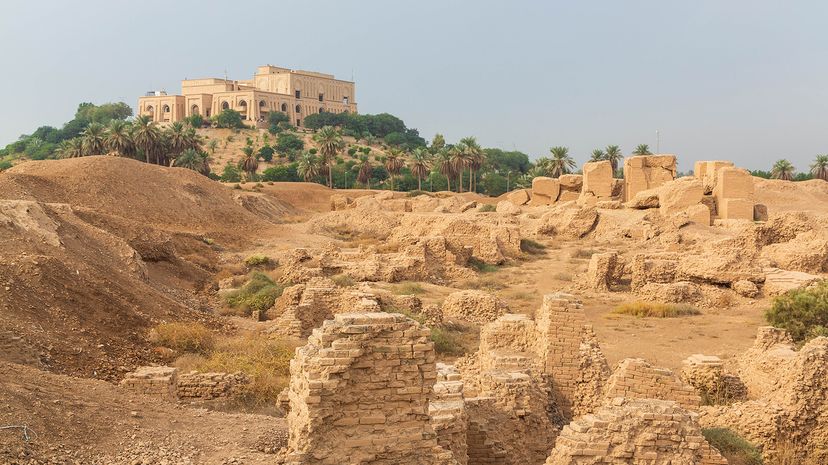
Here you can see the ruins of Babylon in the foreground. Nastya Smirnova RF / Shutterstock

Babylon was once the jewel of the ancient world, a mighty city nestled along the Euphrates River, renowned for its towering ziggurats and legendary Hanging Gardens. But why did Babylon fall?

The collapse of this iconic empire was due to a combination of internal decay, weak leadership, religious discord and the strategic brilliance of invading forces.

Advertisement

The Height of the Babylonian Empire

The Babylonian Empire, particularly during the reign of King Nebuchadnezzar II, was a force that dominated much of Mesopotamia. As the successor to the Assyrian Empire, it conquered lands far and wide, including Jerusalem, leading to the Babylonian exile of the Jewish population.

The first Babylonian Empire laid the foundations, but it was the Neo-Babylonian Empire that rose to global prominence.

Advertisement

Babylon’s wealth, culture and religious devotion to gods like Marduk and the moon god Sin made it a symbol of grandeur.

But under the surface, cracks were forming.

Advertisement

The Reign of Nabonidus and Belshazzar

After Nebuchadnezzar’s death, a series of weak and controversial rulers ascended the throne. King Nabonidus, the sixth ruler of the Neo-Babylonian Empire, alienated the priesthood by promoting Sin over Marduk, the city's chief deity.

He spent extended periods away from Babylon, leaving the city under the control of his son Belshazzar, the crown prince whose rule is immortalized in the Hebrew Bible.

Advertisement

During a great feast in the king’s palace, Belshazzar used sacred temple vessels looted from Jerusalem. The prophet Daniel interpreted the mysterious writing on the wall—"Mene, Mene, Tekel, Upharsin"—as a divine judgment: Babylon would fall.

Civil Unrest and Religious Discontent

Religious tensions and internal unrest weakened the Babylonian state. The shift in worship practices angered the populace and the Babylonian gods’ priesthood. This spiritual and political disconnect contributed to Babylon’s vulnerability.

According to both biblical history and historical records such as the Nabonidus Chronicle, the empire was losing the support of its own people.

Advertisement

The Persian Conquest

In 539 B.C.E., Cyrus the Great, founder of the Achaemenid Empire, led the Persian army against Babylon. Supported by local discontent, his forces reportedly diverted the Euphrates River, allowing troops to enter the city under its walls.

According to Greek historian Herodotus and eastern texts, the great city Babylon was taken in one night.

Advertisement

The Cyrus Cylinder, one of the most important pieces of archaeological evidence, suggests that Cyrus was welcomed by Babylonians. He promised to respect local customs and deities, winning over the people.

Babylon fell without significant resistance, marking the end of the Babylonian Empire.

Advertisement

Biblical Significance

The fall of Babylon holds great meaning in the Holy Bible. The prophet Isaiah and apostle John both spoke of Babylon as a symbol of corruption and pride. Revelation describes the city's fall as happening in one hour, signifying sudden and total destruction.

The Bible records Babylon's fall not just as a historical event, but as a moral and spiritual lesson. The desecration of the sacred vessels and the arrogance of Babylon’s rulers were seen as affronts to the God of Israel.

Advertisement

Life Under Persian Rule

Though Babylon fell, it wasn’t destroyed.

Under Persian rule, it remained a regional capital and administrative center. Many Jewish exiles were allowed to return to Jerusalem, marking the end of the Babylonian captivity. This act is documented both in the Bible and the Cyrus Cylinder.

Advertisement

Babylon’s temples, though eventually neglected, continued to function for some time. The ancient empire had become a province in a larger Persian world.

The Broader Legacy

Babylon’s fall reflects a familiar pattern in world history: how internal division, arrogance, and mismanagement can leave even the greatest conquered cities vulnerable to outside threats.

From the Assyrian empire to the Persian Empire, shifting power defined the known world.

Advertisement

For scientists, historians, and theologians alike, Babylon offers insight into how animal groups like humans form communities, rise, and fall. The empire’s story is a powerful symbol that continues to resonate across time.

So, why did Babylon fall? Because even the most mighty city cannot stand when it loses the support of its own people and faces the determination of a new, rising power.

We created this article in conjunction with AI technology, then made sure it was fact-checked and edited by a HowStuffWorks editor.

Advertisement

Advertisement

Loading...