Why Did the Inca Empire Fall So Quickly?

By: Lena Thaywick  | 
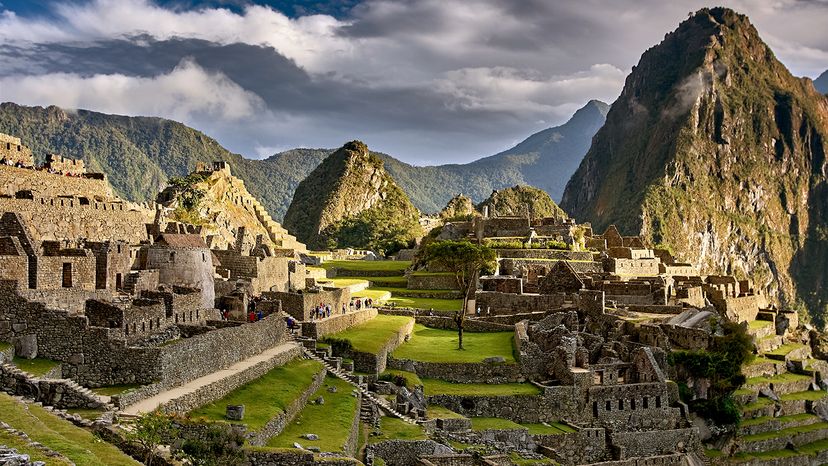
Machu Picchu still stands as a testament to the brilliance of the Inca civilization. BETO SANTILLAN / Shutterstock

Why did the Inca empire fall? How could a mighty empire collapsed in just a few decades?

The Inca Empire once controlled much of western South America, stretching from modern Ecuador to northern Chile. Its fall was not the result of a single battle but of a deadly combination of internal conflict, disease, and the arrival of Spanish conquistadors.

Advertisement

The Inca Empire at Its Height

The Inca Empire was the largest empire in the Western Hemisphere before European contact.

Ruled by the Sapa Inca from the capital city of Cusco, the empire relied on a sophisticated Inka administration, vast road networks, and a powerful Inca army.

Advertisement

The Inca civilization united millions of people across the Andes, including regions near Lake Titicaca, the Ecuadorian coast, and present-day Peru.

A Deadly Succession Crisis

When Inca emperor Huayna Capac died, likely from a European disease brought indirectly through Central America, a power struggle erupted between his sons.

The resulting Inca civil war between Atahualpa and his brother devastated the empire. Although Atahualpa won the civil war, the conflict fractured Inca leadership and drained military strength.

Advertisement

The Spanish Conquistadors Arrived

Francisco Pizarro and the Spanish conquistadors arrived during this moment of instability. They arrived in northern Peru with a small Spanish force equipped with steel swords, firearms, and horses.

The Spanish invaders also brought an invisible enemy: disease.

Advertisement

Smallpox and other illnesses had already killed large portions of the Inca population, weakening resistance and morale among native populations.

The Capture of Atahualpa

The turning point came with the capture of Atahualpa.

Atahualpa refused to submit to Spanish demands and was taken hostage by Pizarro in the town of Cajamarca.

Advertisement

Despite paying a huge ransom of gold and silver, Atahualpa was executed. Atahualpa’s captivity shattered centralized authority and left the empire leaderless.

The Fall of Cusco and Spanish Rule

After Atahualpa’s death, Spanish control expanded rapidly. Francisco Pizarro and his Spanish forces marched on Cusco, the Inca capital. Pizarro established Spanish rule by installing puppet rulers and founding settlements like San Miguel.

Spanish colonists claimed land, labor, and resources in the name of the Spanish king and the Spanish Empire.

Advertisement

Indigenous Allies and Local Resistance

The Spanish conquest was not fought by Europeans alone. Many Indigenous people who resented Inca rule allied with the Spanish.

These Indigenous allies provided manpower, local knowledge, and support that made Spanish victory possible against a much larger Inca army.

Advertisement

Manco Inca and the Neo-Inca State

Inca resistance did not end immediately.

Manco Inca Yupanqui, also known as Manco Inca, led a major rebellion against Spanish rule. After failing to retake Cusco, he established the Neo-Inca State in remote regions.

Advertisement

The last Inca emperor continued resistance for decades before the final collapse.

Why the Inca Empire Fell So Quickly

The fall of the Inca Empire was the result of compounding pressures.

Civil war, weakened leadership, disease, technological disadvantage, and betrayal from within the local population all contributed. Unlike the Roman Empire, which declined over centuries, the Inca Empire fell with shocking speed once Spanish conquest began.

Advertisement

The Inca Legacy Today

Although the empire fell, Inca culture survived. Sites like Machu Picchu stand as reminders of Inca power, engineering skill, and cultural legacy.

The fall of the Inca did not erase the Inca people, whose descendants remain a vital part of South American history.

Advertisement

We created this article in conjunction with AI technology, then made sure it was fact-checked and edited by a HowStuffWorks editor.

Advertisement

Loading...