Why Did the Ottoman Empire Fall During the Industrial Revolution?

By: Lena Thaywick  | 
Before there was Türkiye or Turkey, there was the Ottoman Empire. pamela ranya / Shutterstock

Why did the Ottoman Empire fall? There's no single answer. It was a slow-motion collapse fueled by internal dysfunction, foreign intervention and the brutal modernity of war.

Think of it like a centuries-old machine running on steam while the world shifted to electricity.

Advertisement

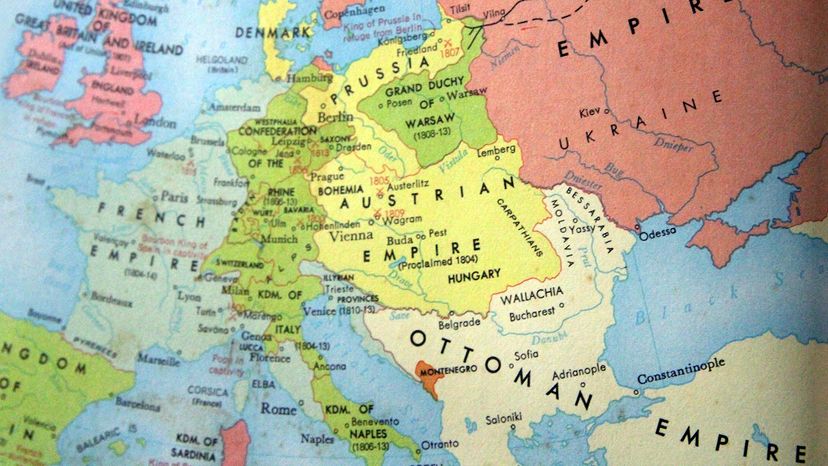
The Ottoman Empire once stretched from the gates of Vienna to the Persian Gulf. By the mid-19th century, Tsar Nicholas I of Russia famously dubbed the Ottoman Empire the "sick man of Europe" amid its faltering economy, territorial losses, and volatile politics.

Internal Problems Weakened the Foundation

Corruption, power struggles, and an outdated bureaucracy undermined Ottoman sovereignty long before bullets flew. The empire’s reliance on local notables to collect taxes meant central authority was often more theoretical than real.

As ethnic composition grew more diverse, holding together a multi-ethnic empire without modern institutions became nearly impossible.

Advertisement

The Young Turk Revolution of 1908 briefly promised reform. But after Sultan Abdul Hamid II was deposed, political chaos ensued.

Competing factions within the Young Turks—including Enver Pasha—focused more on centralizing power than stabilizing the empire. Ottoman decline became irreversible as nationalism surged in every corner of the empire.

Advertisement

Wars Cut the Empire to Pieces

The Balkan Wars (1912 to 1913) were a turning point. The empire lost most of its European lands, including southeastern Europe and parts of Eastern Thrace, to rising Balkan states. These defeats shattered the myth of Ottoman army superiority.

Then came the First World War. When the Ottoman Empire entered the war in 1914 on the side of the Central Powers, it faced off against the Triple Entente, including Great Britain and Russia.

Advertisement

Despite some early victories by the Ottoman military, World War I drained resources, deepened economic issues, and amplified civil unrest.

The 1915 genocide against the Armenians permanently damaged the empire’s international standing and further exacerbated its internal problems.

Advertisement

Foreign Powers Redrew the Map

The postwar world wasn’t kind to the Ottomans.

The Treaty of Sèvres in 1920 effectively carved up Ottoman territory, granting mandates to European powers over its former lands in the Middle East (while the empire’s claims to North Africa had already been renounced).

Advertisement

Arab provinces that had once lived under Ottoman rule were now overseen by Arab leaders allied with European powers.

The Paris Peace Conference solidified this new order, ignoring Ottoman sovereignty and national self-determination. The Constantinople Agreement, secretly drafted by the Allies, split the empire before the war even ended.

Advertisement

Nationalists Spark a Rebirth

Amid the chaos, Turkish nationalists led by Mustafa Kemal Atatürk launched the Turkish War of Independence. They rejected the Treaty of Sèvres and expelled occupying forces from Asia Minor and Central Anatolia.

The victory of the nationalists forced the creation of a new treaty: the Treaty of Lausanne in 1923.

Advertisement

This marked the official end of the empire and the rise of the Turkish Republic. The collapse of the Ottoman was complete, and Atatürk’s secular reforms replaced Ottoman power with a modern state.

The Bigger Picture

The fall of the Ottoman Empire didn’t happen in a vacuum. It was hit by the Industrial Revolution, squeezed by new trade routes bypassing its lands, and caught between rival European states like Austria-Hungary and the Russian Empires.

The pressure to declare war or remain neutral often left the empire worse off either way.

Advertisement

Some historians draw parallels to the Roman Empire or the Byzantine Empire, both of which also fell under the weight of overexpansion and internal decay. The Ottoman story just happened to end in the age of telegraphs and tanks instead of scrolls and swords.

We created this article in conjunction with AI technology, then made sure it was fact-checked and edited by a HowStuffWorks editor.

Advertisement

Advertisement

Loading...