Mass hysteria has reared its ugly head for as long as humans have existed. Adolf Hitler worked enough people into a frenzy to justify the murder of millions of Jews. Jesus Christ, known by all as peaceful, if controversial, was brutally nailed to a cross because a few high-ranking officials felt threatened by him. Although one would hope that people would learn a lesson or two from the mistakes of the past, it seems that history, as the old cliché goes, is forever doomed to repeat itself.
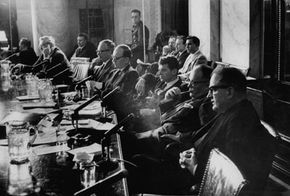
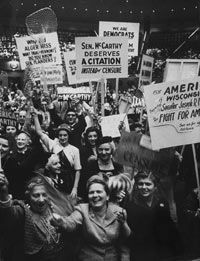
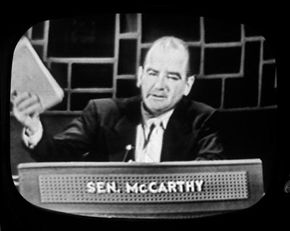
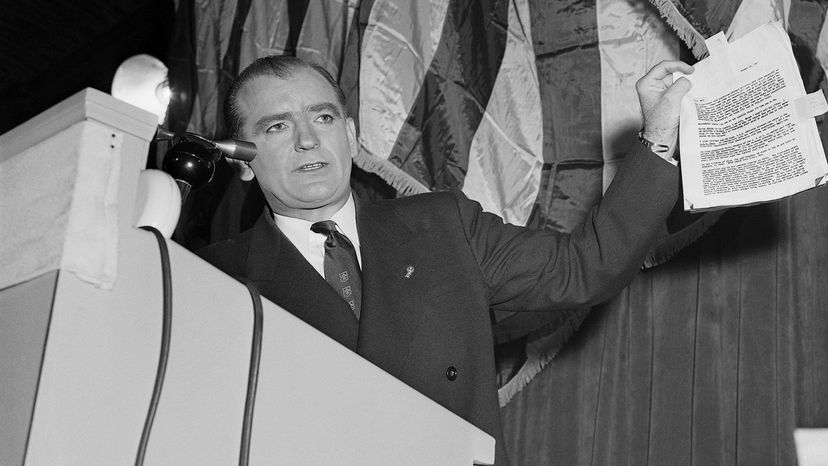
Enter Senator Joseph McCarthy. While he may not have caused genocide or murdered a prophet, he was able to whip up hysteria in America in the early 1950s. McCarthy's issue of choice? Communism. The American Heritage Dictionary defines McCarthyism as "the political practice of publicizing accusations of disloyalty or subversion with insufficient regard to evidence."
Advertisement
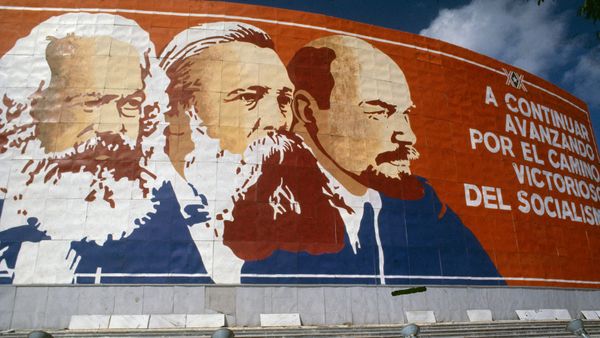
Communism, in simple terms, is an economic system designed to equally benefit everyone in the society. The idea is that everyone contributes to the society and gets an equal share of property and goods. Communist systems are generally controlled by dictators and totalitarian governments — think China, Cuba and North Korea.
By the '50s, communism wasn't exactly a new worry for the United States. In the aftermath of World War I, the country had experienced the First Red Scare ("red" is slang for communism). Russia had a new communist government as a result of the Bolshevik Revolution in 1917, and dictator Vladimir Ilyich Ulyanov (Lenin) had brutally slaughtered about 9 million of his people for resisting his ideals [source: The History Guide]. All of this upheaval upset Americans, so lawmakers decided to prevent the spread of communism to the United States by enforcing the Sedition Act and the Espionage Act. The First Red Scare was characterized by the ferocity with which the U.S. government identified and attacked suspected communists.
By the time McCarthy won a Senate seat in 1946, World War II was over and the Cold War was beginning. Communist governments had gained hold in Eastern Europe and China, and Americans were increasingly concerned about it — and about rumors of high-ranking U.S. government officials who were secret communists. McCarthy took advantage of the mounting fear, but because it isn't actually illegal to be a communist, he started charging people with the act of subversion — the "systematic attempt to overthrow or undermine a government or political system by persons working from within" [source: Merriam-Webster's Dictionary of Law]. Then he got to work prosecuting them for selling or giving American security secrets to communist governments.
In this article, you'll learn about the basics of communism, McCarthy's interview tactics, and recent evidence about the communist presence in the United States at the time of McCarthyism. You'll also learn about the impact of McCarthy's accusations on the lives of the accused, the country as a whole and his own family name.
Advertisement