The Aftermath

Of the 88,000 Northern troops in the battle, more than 23,000 were killed or wounded, about 26.1 percent. Of 75,000 Confederate troops, more than 28,000 were killed or wounded, approximately 37.3 percent. More than 7,000 men died over the course of those three days. More important for the war, however, the Confederate Army was forced to retreat back to Virginia and would not return to the North. That eased tensions for Northerners worried that the war was coming to their doorstep, and it ensured that Robert E. Lee would not capture Washington, D.C., and force a peace from Lincoln.

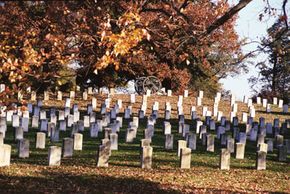
Gettysburg cemetery
Dennie Cody/Taxi/Getty Images
The cemetery at Gettysburg National Military Park

However, the Battle of Gettysburg did not end the war. Some in the North, including Lincoln, blamed Gen. George Meade for not pursuing the defeated Confederate Army and for allowing it to cross the Potomac and regroup. In fact, Lincoln would fire Meade shortly after the battle because of this. However, some historians argue that the Union Army had suffered greatly at Gettysburg, too, and may not have been physically able to pursue the enemy, especially since Meade had lost two of his top generals, Reynolds and Hancock.

Regardless, the Civil War continued for another two years. The South would win more battles, but Lincoln's new general, Ulysses S. Grant, was much more willing to play the numbers against Lee, which the previous line of generals had been unwilling or unable to do. While considered a butcher by some, Grant would not back down after a Union defeat -- he would simply regroup and continue pursuit. He was unlike anyone Lee had faced before, and it would eventually spell the demise of the Southern Army and the Confederacy.

To learn more about the Battle of Gettysburg and the Civil War, look over the links on the next page.

Where was Ulysses S. Grant?
While the Battle of Gettysburg was being fought, another, much longer, fight was taking place in Mississippi. Gen. Ulysses S. Grant led a 47-day siege on Vicksburg that ended with the town's surrender on July 4, 1863 -- the day after the Battle of Gettysburg ended. Perhaps less theatrically dramatic than Gettysburg, Vicksburg was equally, if not more, important to the Union. By taking control of Vicksburg, Grant concluded a Western campaign that reclaimed the Mississippi River, a vital trade route, for the North. Additionally, it helped to cut the Confederacy in two, which made supplying the Southern troops that much more difficult. It's often overshadowed by Gettysburg's more symbolic victory, but Vicksburg may be the real reason July 1863 is regarded as the turning point of the war.

­