
The First Crusade
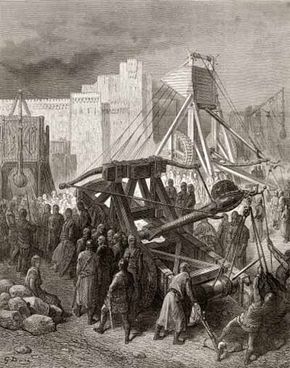
The Crusading forces were mostly French, and they set off for Constantinople in August 1096. In June of 1097, the first meeting between the Crusaders and the Turks took place at Nicea. The Crusaders sieged Nicea and held off Turkish relief armies. The Turks hung on for a month, even as the decapitated heads of Turkish corpses were flung at them. But when the Byzantine forces arrived, the Turks surrendered.
The siege at Nicea, while successful for the Crusaders, gave the Crusaders a sense of respect for their enemy. The Muslim armies possessed superior military heritage; they had manuals for war and better equipment -- spears, swords, daggers, and bows that could be shot from both long and short range. The European knights, however, were used to fighting in formations with lances and swords, and the cavalry's spears and swords were crude. The superior Muslim archery would eventually drive the Crusaders to develop heavier knight armor and the crossbow.
Advertisement
The Battle of Dorylauem educated the Crusaders on Muslim military bite. The battle took place as the armies were headed for Antioch. While the Crusaders camped at Dorylaeum, the Turks attacked with darts, javelins, and arrows shot from long range. As they assaulted their enemy, the Turks screamed, whistled and drummed, which added a sense of confusion and panic to the battle. Most of the Crusaders were foot soldiers -- easily cut down by the fire. The knights were tougher to kill because of their armor. But the knights were trained for organized charges with their lances. So, they didn't know how to react to a showering of arrows.
The Turks were able to stay out of range, but were finally forced to flee when Crusader reinforcements, who had been camping a short distance away, showed up. The Crusaders continued the march to Antioch.
The siege on Antioch, a city surrounded by walls and towers, lasted about eight months. Many died from starvation and disease. One of the leaders of the Crusades finally struck up a deal with a disgruntled Turk, who allowed the armies to climb over a section of the walls while the city slept. The Crusaders took the city, but they disagreed over how it should be ruled, which slowed their attempt to reach their final destination: Jerusalem.
If the Crusaders' war tactics and weaponry were so weak, then how did they eventually take hold of Jerusalem? Find out on the next page.